Archive for the ‘Bible Study’ Category

PurposeEzekiel was one far out dude.  I could focus on the wheels, sing about dem dry bones or wish that I could see the beasts of his prophecy in the zoo but I want to step away from the details of Ezekiel’s message.  Let’s focus on an aspect of Ezekiel’s life that make’s him another Hupomone Man.

Ezekiel was from a priestly family and like Daniel he was taken from his home in Israel and brought to Babylon.  His family was probably prominent and influential.  Ryrie places him among the many hostages that Nebuchadnezzar took to ensure the cooperation of his newly conquered land.  Unlike Isaiah and Jeremiah, Ezekiel prophesied to the Jews in Babylon.

As I read through Ezekiel this time around, I really tried to keep the words of the prophecies given to him by God out of focus.  I did not want to get caught up in the wonder and beautiful detail of Ezekiel’s dreams.  I really wanted to get a feel for Ezekiel the man.  This is perhaps most difficult to do with Ezekiel among those whom we term the Major Prophets as there is minimal historical detail.  With the details out of focus I began to notice a recurring phrase:  “Then you will know that I am the Lord”.  It takes some different forms, “and then you shall know that I am the Lord.”  The Holy Spirit whispered in my ear, “Hupomone Men have purpose.”.  Honestly it took me a bit to make the connection (I probably could have used Ezekiel’s help….connecting the bones of the thought together….ok ouch that was bad).

Ezekiel completely understood the purpose of everything that he said and did.  Speaking for God is not an abstract activity.  The life of the Hupomone Man is not an abstract activity.  It has purpose.  It really has one overarching purpose.  That purpose is to act, speak, write…to live in such a way that those around you can “know that He is the Lord.”  Peter put it this way, “Whoever speaks, is to do so as one who is speaking the utterances of God; whoever serves is to do so as one who is serving by the strength which God supplies, sot that in all things God may be glorified through Jesus Christ, to whom belongs the glory and dominion forever and ever. Amen” 1 Peter 4:11

As Hupomone Men we can be sure that everything that happens in our lives is some how contributing to this purpose, either for ourselves or for those around us.  Ezekiel deeply understood this even as his wife passed away, there was purpose. ( I deal more with this particular story here. ) This is all part of our great assurance that God is in control.  We cannot, we must not allow circumstances to impinge on this great Peace that we have as children of God.  Ezekiel never lost sight of his purpose through all of the turmoil, through all the circumstances of his life.  He demonstrated Major Endurance and certainly earned the title of Hupomone Man.
Read Full Post »

ELove

We are looking at some of the qualities of Isaiah and Jeremiah that contributed to their incredible endurance as men of God.  They are qualities that qualify them to be wonderful examples of Hupomone Men. These qualities are not a function of their vocation as prophets of God.  These qualities are not tied up in the message that Isaiah and Jeremiah brought to the people of God.  These qualities are all about the daily choices of life that Isaiah and Jeremiah made as they responded to the call of God to be in relationship with Him.  The quality of Hupomone that we are going to look at today is a direct result of that relationship.

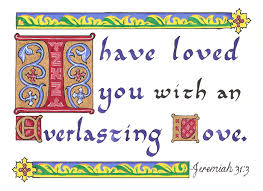
 The LORD appeared to him from afar, saying, “I have loved you with an everlasting love; Therefore  I have drawn you with lovingkindness.”  Jeremiah 31:3

Isaiah and Jeremiah had every reason to hate God’s people.  Given the content of many of their prophesies (particularly Jeremiah) one might settle on the idea that they did indeed hate.  Here in the United States, as a society we have embraced an idea of “thought correctness” that violates the very core of hupomone love.  That idea is that if you “hate” a behavior that I am involved in, you hate me.  This idea rejects the intrinsic value of the individual, the very basis of God’s love for us. It limits the value of a person to their actions.  God cries out to His people, “I hate your behavior and its consequences, but I love you with an everlasting love”.  The New Testament labels this love Agape.  This is the love that is the foundation of hupomone living.  The call emanates from God to our “spiritual” ears and is a function of listening. This is Jesus’ cry, “He who has ears to hear, let him hear.” Daily choice is a function of will. It is the physical response to truly hearing God. Love is a function of relationship.  It is the foundation that enables all the rest of it.

 If I speak with the tongues of men and of angels, but do not have love, I have become a noisy gong or a clanging cymbal. 1 Corinthians 13:1

Isaiah and Jeremiah desperately and completely loved God.  Isaiah and Jeremiah desperately and completely loved His people.  It was this love extending from their relationship with God that drove their hupomone lifestyle for a combine 100 years.  Faithfully they spoke truth to Israel, often reaping derision and persecution and it was Agape that validated their ministry.  Some look at the prophetic of the Old Testament and see hate and condemnation.  I look and see hupomone living.  I see the call of God to live out His everlasting love daily through meaningful choices empowered by the Holy Spirit.  I see the great provision of grace, seeking to redeem the results of rebellion.  I hear God calling out through his people the message of love, redemption and hupomone.

Read Full Post »

Marked Off Calendar

“Trust in the Lord forever, for in God the Lord, we have an everlasting rock”

Isaiah 26:4

If you have followed me for long, you realize that I have a Hupomone fetish.  The word is just cool.  So as I was reading Isaiah and Jeremiah, I kept hearing over and over, “These guys are real Hupomone Men”.  Yes, when I read Scripture I often hear things and no it is not always God.  Sometimes it is something like, “There is ice cream in the freezer.”  In this case it really made me focus not so much on the message that these two great prophets delivered but on the lives that these two great prophets lived.  The message made them prophets of God.  The lives make them men of God, Hupomone men.

Last week we established that Isaiah and Jeremiah were Hupomone men because they were called by God.  You may be thinking, “Well that let’s me off the hook.  I am not called to be a prophet!”.  The Romans may have been have been thinking the same thing when Paul disabused them of that idea by opening the epistle to Rome with:

…Jesus Christ our Lord,  through whom we have received grace and apostleship to bring about the obedience of faith among all the Gentiles for His name’s sake, among whom you also are the called of Jesus Christ; to all who are beloved of God in Rome, called as saints: Grace to you and peace from God our Father and the Lord Jesus Christ. Romans 1:4b-7

Yes, we are not all called to be prophets but we are called to obedience, called to sainthood (hagios comes from a root that indicates purity, freedom from sin).  This call for Jeremiah and Isaiah took on the face of the prophetic, serving an Israel that had lost its way.  This call may well be very different for each person reading this blog.  The call is not to a specific vocation but to “the obedience of the faith”.  Jesus makes it clear that the call is not enough.  In his parable of the wedding guests he concludes, “For many are called, but few are chosen.” Matthew 22:14.  As we look at the story (and I am not going to recount the whole thing here…grab your Bible and read it!) we see that the hapless guest to whom Jesus refers was called to the party but behaved himself out of being chosen to stay.  This is where we see that the call is not enough.  So what is this other thing, this next step that sets Isaiah and Jeremiah and all those Hupomone men before and after them apart from the crowd?

If it is disagreeable in your sight to serve the LORD, choose for yourselves today whom you will serve: whether the gods which your fathers served which were beyond the River, or the gods of the Amorites in whose land you are living; but as for me and my house, we will serve the LORD. Joshua 24:15

Joshua in his fairly famous soliloquy before the people of Israel says, “choose for yourselves today”  Isaiah and Jeremiah had many todays in their combined 100 years of prophetic service to God. The next quality that set them apart as true Hupomone men is:

Isaiah and Jeremiah both made a daily choice to serve God.

They came dressed in their wedding clothes day after day.  Even when all of the other prophets were sporting Bermuda Shorts and Hawaiian Shirts, they came in wedding clothes.  Even when the King made it clear that the honeymoon was over, they came in wedding clothes, and while Scripture does not record it, tradition tells us that even when it meant death, they came in wedding clothes.  They were wedding clothes of obedience, truth and purity.  They are the wedding clothes of the Hupomone Man.

Read Full Post »

Telephone

“Trust in the Lord forever, for in God the Lord, we have an everlasting rock”

Isaiah 26:4

I have been reading the Major Prophets in my personal devotions.  Isaiah and Jeremiah, these guys were some Major Hupomone Men!  Depending on how you figure the history and do the math Isaiah spoke for God over a period of around 60 years!  Jeremiah’s career spanned about 40 years.  They were both fearless before men and absolutely devoted to God.  They were both despised and revered.  They were both threatened and abused for their devotion to the word of the Lord.  They are both honored by recognition in the New Testament.  Jeremiah is even called out as a potential identity for Jesus Christ.  Isaiah is recognized as the most prolific messianic prophet.  He foretold John the Baptist and his mission.  It was the book of Isaiah that the Ethiopian Eunuch was reading on his way home from Jerusalem.

So what is it about these two men that makes them truly Hupomone men?

 Isaiah and Jeremiah were both called by God to serve him and speak to the people for him.

“Before I formed you in the womb I knew you, And before you were born I consecrated you; I have appointed you a prophet to the nations.”  Jeremiah 1:5

“Then I heard the voice of the Lord, saying,”Whom shall I send, and who will go for Us?”  Then I said, “Here am I.  Send me!”  Isaiah 6:8

The call of God on our lives is at the very core of Hupomone.  There is an illusion here that can trip us up.  It may appear to us that the call of God on the lives of Jeremiah and Isaiah was about being a prophet.  Jeremiah is a little more explicit about the nature of God’s call on his life.  While the call extends to vocation, it is not at its center about vocation. “And before you were born I consecrated you…”.  Jeremiah was set apart to be in relationship with God long before he ever delivered a Word from the Lord.  We see Isaiah already positioned to hear the voice of God before he seals his vocation with the words, “Here am I Send me!”  

Paul lays out the course of Hupomone for a young pastor named Timothy

9 who has saved us and called us with a holy calling, not according to our works, but according to His own purpose and grace which was granted us in Christ Jesus from all eternity, 2 Timothy 1:9

Hupomone begins with salvation.  It is only when we accept the extended hand of fellowship from God that includes a call to be separated or holy that we open the door to the steadfast, enduring lifestyle of abandoning our own purposes to follow God’s.  Paul makes it clear that this call is not about anything that we have done (or by extension anything that Isaiah or Jeremiah had done).  It is an undeserved gift.  It is grace.  In Ephesians Paul tells us that the very nature of this calling gives us hope “18 I pray that the eyes of your heart may be enlightened, so that you will know what is the hope of His calling, what are the riches of the glory of His inheritance in the saints,” Ephesians 1:8 

The kind of perseverance that we see rising out of the call of God comes about from having a view to eternity and to the inheritance of the saints, first to Israel in the Old Testament and then opened up to all humankind by the death and resurrection of our Lord and Savior Jesus Christ.


Read Full Post »

For I am confident of this very thing, that He who began a good work in you will perfect it until the day of Christ Jesus.  Philippians 1:6

I watched my Twitter Feed explode with one-liners a few months ago.  The words “Blown Away”, “Amazing” and “Life Changing” were bandied about with some regularity.  The many, many conferences held every year feature so many incredibly talented public speakers and so much good material.  I want to be clear that almost without exception I highly respect the achievements, concepts and talents of every one of them.  Why then is there not an international explosion of amazing Christian leadership throughout the world after such a life changing, mind-blowing, billion dollar events?

I grew up in the developing years of what I am going to call the “Conference Culture”. Whether it was “The One Minute Manger”, “Evangelism Explosion”, FISH (that was a fun one), Service that Sells, Promise Keepers, The OZ Principle, Who Moved My Cheese, Emotional Intelligence, 21 Irrefutable Laws…well you get the picture…I found one thing to be true:

The more “blown away”, the more “life changing”, the more “amazing” attendees found the speakers and content of any given conference, the less likely it was to have a lasting impact.  The men and women who were truly impacted by the content of any given conference were those who already had a framework that the principles and concepts could fit into.  

Hupomone living is about building that framework.  Notice the end of the last word in that sentence, work.  Paul called Timothy to exactly that kind of work.

Be diligent to present yourself approved to God as a workman who does not need to be ashamed, accurately handling the word of truth.  2 Timothy 2:15

Paul goes on to tell Timothy:  Nevertheless, the firm foundation of God stands, having this seal, “The Lord knows those who are His,” and, “Everyone who names the name of the Lord is to abstain from wickedness.” 2 Timothy 2:19

It is on this firm foundation that we can build the framework of Hupomone living.  We engage the prayer, direction, promises and thanksgiving that will remove us from the reactionary world of circumstances and place us solidly in the steadfast, persevering world of the will of God.  It is only then that those “blown away”, “life changing” sound bytes that are all too quickly lost in the clutter of life to be soon replaced by the next “blown away”, “life changing” sound bytes will no longer blow you away.  They will find that niche, being plugged into a persevering lifestyle that is about maturing and growing anchored on the firm foundation.  That sound byte is unlikely to change your life, but Jesus will.

For I am confident of this very thing, that He who began a good work in you will perfect it until the day of Christ Jesus.  Philippians 1:6

Read Full Post »

Good Morning!

So yes I have taken a break from writing while Allana was writing her “90 Day Faith Walk”.  I share some of the posts here but if you would like to do the whole “Walk” you can find it HERE.  Also her women’s group True Beauty is open for new members from April 26th until May 17th.  There is currently a waiting list but Allana will be adding additional members.  The group operates on Facebook and is by invitation only.  If you are interested you can email me for more information.


The LORD, the Psalmist’s Shepherd.
A Psalm of David.
1 The LORD is my shepherd, I shall not want. 2 He makes me lie down in green pastures; He leads me beside quiet waters. 3 He restores my soul; He guides me in the paths of righteousness For His name’s sake. 4 Even though I walk through the valley of the shadow of death, I fear no evil, for You are with me; Your rod and Your staff, they comfort me 5 You prepare a table before me in the presence of my enemies; You have anointed my head with oil; My cup overflows. 6 Surely goodness and lovingkindness will follow me all the days of my life, And I will dwell in the house of the LORD forever .

So here is the reality of The Nineteen days.  We never know when we are living them out.  The Guidry’s are not really unique in this experience.  I would guess that everyone of you has walked through their own Nineteen Days, innocent of the storm that was just over the horizon.  The fact is that this was not my first journey through the Nineteen Days, but it is my first journey through them where I truly understood David’s heart as he penned this Psalm.  How we walk out the Nineteen Days is a function of this Psalm.  Sentence by sentence it is a guide written by a man who walked through his own Nineteen Days many times over.

David knew about enemies.  He faced them in a literal way that few of us have ever (and most of us will never) experience.  Whether it was the giant Goliath or his own son Absalom David’s life was filled with the turmoil that mortal enemies brings. We are unlikely to face an armored giant or have our son plot to steal everything we have but the enemies we face are just as real as those that assaulted David’s peace. Sometimes we are our own worst enemy.  Other times ( and this phrase is a poetic restatement of the “Valley of the shadow of death”) the simple fact that we are God’s people in an ungodly world places us in the presence of our enemies.  God’s table provides sustenance and hospitality in the presence of those who hate him and us and it IS God’s table.  He does not call us to prepare our own tables in enemy territory.  He calls us to sit at his table under the covering of his hospitality.  Just as wisdom prepares a place for those who seek God in Proverbs 9, God has prepared this haven in the midst of turmoil.

There is the key phrase, “in the midst”, David says “In the presence”.  This is a concept that too many Christians just don’t get; that too many preachers and teachers ignore.  It is attractive to us, to just avoid the whole “valley of the shadow of death”.  Certainly if I pray right and have enough faith I can just stay on the mountaintop all the time!  When Allana was first diagnosed with cancer we had several very well meaning brothers and sisters in Christ who assumed that if we just prayed and had faith Allana would be instantly and miraculously healed.  Now don’t get me wrong I completely believe that God does heal!  I also believe that God intervened on many occasions throughout our journey through Cancer.  However when Allana and I prayed and sought God, especially following our first round of Chemotherapy, His answer was “I need you to walk through the valley of the shadow of death, My rod and My staff will comfort you.  I will prepare a table in the presence of your enemies.  You will dwell in My house forever.”  The fruit that has come from the walk in the valley has been truly amazing.  God has provided opportunity after opportunity for us to share Him with so many.  Here is the cool thing about the tradition of hospitality in the Old Testament times, strangers were welcome at the table.  The table that God has prepared for us “in the presence of mine enemies” is one that we are free to invite ALL to join.  It is not a table that we are supposed to wall off or cower under.  It is a place that is made for us to introduce our enemies to our most gracious (literally full of grace) host Jesus Christ our saviour and Lord.  Who will you invite to sit at God’s table?

Read Full Post »

The LORD, the Psalmist’s Shepherd.
A Psalm of David.
1 The LORD is my shepherd, I shall not want. 2 He makes me lie down in green pastures; He leads me beside quiet waters. 3 He restores my soul; He guides me in the paths of righteousness For His name’s sake. 4 Even though I walk through the valley of the shadow of death, I fear no evil, for You are with me; Your rod and Your staff, they comfort me 5 You prepare a table before me in the presence of my enemies; You have anointed my head with oil; My cup overflows. 6 Surely goodness and lovingkindness will follow me all the days of my life, And I will dwell in the house of the LORD forever .

So here is the reality of The Nineteen days.  We never know when we are living them out.  The Guidry’s are not really unique in this experience.  I would guess that everyone of you has walked through their own Nineteen Days, innocent of the storm that was just over the horizon.  The fact is that this was not my first journey through the Nineteen Days, but it is my first journey through them where I truly understood David’s heart as he penned this Psalm.  How we walk out the Nineteen Days is a function of this Psalm.  Sentence by sentence it is a guide written by a man who walked through his own Nineteen Days many times over.

The nature of biblical Hebrew poetry is repetitive.  This form can serve three functions.  It creates a literary elegance that is aesthetically pleasing.  It emphasizes the thought the poet is trying to convey.  It also allows the poet to clarify the thought being conveyed, particularly when the first iteration is a metaphor.  In the first two verses David offers one of the most universally recognized biblical metaphors.  In verse three he opens his heart and repeats the metaphor in the plain words of his experience. “He restores my soul; He guides me in the paths of righteousness for His names sake.”  There is a temptation to equate the green pastures and the quiet waters with the circumstances of our lives.  This can be the trap of the Nineteen Days.  We can begin to believe that the restoration of our souls and the righteousness of our lives are tied up in how things are going.  This is especially easy when thing are going great.  We read “He makes me lie down in green pastures.” and we say wow the green pastures are the thing.  As long as I am in green pastures I am going to be ok.  In fact I am going to do everything I can to stay in green pastures.  The hook is that when we do this we stop following God.  The green pastures are not about our life circumstances, they are about God.  He restores my soul.  The path along the quiet waters, the path of righteousness is not about us and where we are, it is about who is our guide.  In fact David goes on to talk about circumstances.  “Even though I walk through the valley of the shadow of death, I fear no evil, for You are with me; Your rod and Your staff, they comfort me”  When I first read through this with the Nineteen days in mind, I thought, “Here it is, day 20, been there done that.”  But as I began to pray about it God gently told me, day 20 is no different.  Why is the rod and the staff so comforting?  The symbolize authority and power, support.  Is it that God will thunder in to the valley and beat back all the darkness?  Perhaps The Shepherd, the Jewish superhero from the comics David read as a boy would; with lightning bolts firing from the rod and the staff crashing down with the power of an earthquake.  This does not fit the metaphor.  What did the good shepherd use his rod and his staff to do?  We only need to step back to the beginning of David’s beautiful poetry, “He makes me lie down in green pastures; He leads me beside quiet waters. 3 He restores my soul; He guides me in the paths of righteousness For His name’s sake.”  Sorry no thunderous rescue.  The reality is that our circumstances do not change the behavior of our God.  Even though I walk through the valley of the shadow of death, I fear no evil, for You are with me; Your rod and Your staff, they comfort me….they make me lie down in green pastures, they lead me beside still waters.  Take comfort whether in the nineteen days, the years that precede them or the days that follow, God is God, He is our great shepherd.  If you follow the direction of his rod and his staff you will find yourself in green pastures, besides still waters.  Your soul will be restored no matter how battered it is and  you will find yourself on the path of Righteousness, not by any effort of you own but by direction of the only one who can lead you home.


Read Full Post »

The LORD, the Psalmist’s Shepherd.
A Psalm of David.
1 The LORD is my shepherd, I shall not want. 2 He makes me lie down in green pastures; He leads me beside quiet waters. 3 He restores my soul; He guides me in the paths of righteousness For His name’s sake. 4 Even though I walk through the valley of the shadow of death, I fear no evil, for You are with me; Your rod and Your staff, they comfort me 5 You prepare a table before me in the presence of my enemies; You have anointed my head with oil; My cup overflows. 6 Surely goodness and lovingkindness will follow me all the days of my life, And I will dwell in the house of the LORD forever .

So here is the reality of The Nineteen days.  We never know when we are living them out.  The Guidry’s are not really unique in this experience.  I would guess that everyone of you has walked through their own Nineteen Days, innocent of the storm that was just over the horizon.  The fact is that this was not my first journey through the Nineteen Days, but it is my first journey through them where I truly understood David’s heart as he penned this Psalm.  How we walk out the Nineteen Days is a function of this Psalm.  Sentence by sentence it is a guide written by a man who walked through his own Nineteen Days many times over.

He leads me beside quiet waters.”

I have only been white water rafting once and it was in the middle of a terrible summer drought so that what should have been a harrowing, exciting and somewhat dangerous adventure turned out to be more of a stroll in the park on a sunny day.  I know that this same river in other seasons has been dangerous to the point of claiming lives.  The rivers and streams of David’s Israel were just as changeable.  One minute they could be quiet streams bubbling along and then a cloud burst, perhaps not even in the immediate vicinity, could swell them to deadly proportions.  The “quiet waters” is probably a reference to the many small springs throughout the land of Israel.  Cool, clean and refreshing these springs were a safe place of comfort for thirsty sheep.  God desires to lead us in places of refreshing safety; paths of restoration and righteousness that fulfill His purpose for His people.   Enjoying the rest and nutrition of the green pastures and following our Great Shepherd beside the quiet refreshing, restoring waters of His grace and love are Spiritual disciplines.  There is the temptation during the Nineteen Days to believe that we do not need to walk in the Spirit.  Everything seems wonderful….nothing could happen to steal the joy and peace we feel right.  When we place ourselves in that frame of mind we begin to rely on the circumstances of our life for our well-being instead of our Great Shepherd.  David makes it clear that the pastures and waters are not about circumstances.  “He restores my soul; He guides me in the paths of righteousness For His name’s sake.”  Righteousness and restoration are about our relationship with God.

Here is the hook.  Since the pasture and the waters are not about circumstances, we are no less resting in green pastures on day 20 than we are on day 2.  Just because we have a situational change (even a drastic one) the reality of the Spiritual disciplines of the pasture and the waters are not impacted whatsoever!  However it does not FEEL that way!  If we could just ride the whole way on our feeling of well-being then it would not involve Spiritual discipline.  When I was holding Nisa and rejoicing in well-being as Christmas approached and we felt gifted beyond belief the pasture and the waters seemed a no brainer.  When I sat on that hospital bed with my wife’s health failing beside me and heard the word’s, “I am sorry Allana has leukemia”  and then “I am sorry but the leukemia is Philadelphia positive, without a bone marrow transplant….” it would seem that everything had changed.  The pasture vanished, the waters became bitter….or had they. “Even though I walk through the valley of the shadow of death, I fear no evil, for You are with me; Your rod and Your staff, they comfort me”.  The valley of the shadow of death is about circumstance.  The verbs in Hebrew are all in the same tense (except for anointed).  They all indicate current and ongoing action.  The green pastures and still waters do not vanish because we are in the valley.  If we focus on His rod of guidance and his staff of protection the nourishing green grass of His Word and the refreshing waters of His Spirit remain as we walk the path of Righteousness because none of it depends on me or my circumstances.  It all depends on HIS NAME.  “And there is salvation in no * one else; for there is no other name under heaven that has been given among men by which we must be saved.” Acts 4:12

Enjoy the green pastures and still waters TODAY!

Read Full Post »

The LORD, the Psalmist’s Shepherd.
A Psalm of David.
1 The LORD is my shepherd, I shall not want. 2 He makes me lie down in green pastures; He leads me beside quiet waters. 3 He restores my soul; He guides me in the paths of righteousness For His name’s sake. 4 Even though I walk through the valley of the shadow of death, I fear no evil, for You are with me; Your rod and Your staff, they comfort me 5 You prepare a table before me in the presence of my enemies; You have anointed my head with oil; My cup overflows. 6 Surely goodness and lovingkindness will follow me all the days of my life, And I will dwell in the house of the LORD forever .

So here is the reality of The Nineteen days.  We never know when we are living them out.  The Guidry’s are not really unique in this experience.  I would guess that everyone of you has walked through their own Nineteen Days, innocent of the storm that was just over the horizon.  The fact is that this was not my first journey through the Nineteen Days, but it is my first journey through them where I truly understood David’s heart as he penned this Psalm.  How we walk out the Nineteen Days is a function of this Psalm.  Sentence by sentence it is a guide written by a man who walked through his own Nineteen Days many times over.

 He makes me lie down in green pastures

What a lovely picture in words.  We can all envision ourselves laying out in luxurious grass, running our hands through it and wiggling our toes.  I certainly do not want to ruin your revery but lets get back to the imagery of David’s psalm as a whole.  It is easy to do when we go back to the Hebrew.  Deshe’ Naveh, is translated “green pastures”.  The imagery is a little more direct and specific.  Deshe’ is not the color green but specifically refers to fresh grass, as opposed to withered, dry grass.  It is the kind of grass that a shepherd would recognize as healthy and nutritious for his sheep.  Naveh is a specific reference to a dwelling place for both sheep and shepherd.  Nathan the prophet tells David that it was God who took him from the sheep and the “Naveh” to make him king.  Scripture repeatedly uses this word for The Lord’s “habitation” or “dwelling place”.  Deshe’ Naveh is not about a fuzzy, feel good place, it is about a place that promotes real health and wellness for us in the presence of our great shepherd, in the presence of our God.  Like sheep we are all too ready to eat whatever toxic plants look good at the moment (yes sheep will poison themselves if left in an environment with plants toxic to them).  It is only when we follow our shepherd that we will find the Deshe’ Naveh that we so desperately need.

So by now you are probably asking, what does this have to do with the Nineteen Days?  It is easy to see and feel the Deshe’ Naveh in the sunny calm of the nineteen days.  Too often we spend the Nineteen Days wiggling our toes in the grass instead of taking in the nutrition and wellness that is the provision of the Good Shepherd.  Then when the fuzzy comfort of the sunshine is suddenly replaced by bitterness of the storm we think that the Deshe’ Naveh is gone and we run.  Like silly sheep we run from the very place of health and wellness that God has made our habitation over some wind, thunder, lightning and rain.  We are tempted to eat the toxic greenery, just because there it feels like the sun is shining.  We break our legs in the rocky crags as we run to what appears to be shelter.  Will the good shepherd track us down and beckon us back to the Deshe’ Naveh, even carry us while we heal?  Amen and Amen YES!  But he also honors our free will and if we do not surrender to the arms of the shepherd the results can be devastating to all.

I pray true health and wellness for you all.  May you always choose to rest with Your Shepherd in the Deshe’ Naveh

Read Full Post »

The LORD, the Psalmist’s Shepherd.
A Psalm of David.
1 The LORD is my shepherd, I shall not want. 2 He makes me lie down in green pastures; He leads me beside quiet waters. 3 He restores my soul; He guides me in the paths of righteousness For His name’s sake. 4 Even though I walk through the valley of the shadow of death, I fear no evil, for You are with me; Your rod and Your staff, they comfort me 5 You prepare a table before me in the presence of my enemies; You have anointed my head with oil; My cup overflows. 6 Surely goodness and lovingkindness will follow me all the days of my life, And I will dwell in the house of the LORD forever .

So here is the reality of The Nineteen days.  We never know when we are living them out.  The Guidry’s are not really unique in this experience.  I would guess that everyone of you has walked through their own Nineteen Days, innocent of the storm that was just over the horizon.  The fact is that this was not my first journey through the Nineteen Days, but it is my first journey through them where I truly understood David’s heart as he penned this Psalm.  How we walk out the Nineteen Days is a function of this Psalm.  Sentence by sentence it is a guide written by a man who walked through his own Nineteen Days many times over.

The Lord is my Shepherd, I shall not want.

This premise is a must.  It is not a theory, a cute saying or even a prayerful wish.  It is only when you function within this Spiritual Truth without regard to apparent circumstances that you can look back at the Nineteen days without fear.  This passage would of course be out of step if it was talking about a fulfillment of all my personal desires.  The translation of the Hebrew word chacer here as “want” is unfortunate in a modern translation.  This word is really about lacking basic needs (not even cultural and certainly not the “me” generational concept of needs).  It could even be translated “become empty”.  Sodom and Gomorrah were destroyed because they lacked (chacer) ten righteous men.  The reality is that the shepherd does not serve the “wants”/desires of His flock.  He serves the needs of his flock as he guides them in His wisdom and for His purposes.  It is when we release our own will to the Shepherd that we rest in the assurance that we will never “become empty”.


Read Full Post »

« Newer Posts - Older Posts »