Posts Tagged ‘Old Testament’

“My people are destroyed for lack of knowledge. Because you have rejected knowledge, I also will reject you from being My priest. Since you have forgotten the law of your God, I also will forget your children… My people consult their wooden idol, and their diviner’s wand informs them; For a spirit of harlotry has led them astray, And they have played the harlot, departing from their God. They offer sacrifices on the tops of the mountains And burn incense on the hills, Under oak, poplar and terebinth, Because their shade is pleasant. Therefore your daughters play the harlot And your brides commit adultery.”  Hosea 4:6, 12-13

As you may have noticed I am studying Hosea.  I would like to thank Dr. Stephen Dempster of Crandall University for recommending Douglas Stuart’s works on Hosea and the Minor prophets. I came across these Characteristics of Idolatry in Word Biblical Themes Hosea-Jonah.  The parallels to modern life and modern Christianity are unmistakable.  While we may disdain the ancient Peoples who worshiped gods of wood, metal and stone I wonder how really far removed we are from them.

1.  Idolatry claimed to offer results that were guaranteed

2.  Idolatry indulged the selfish interests of people

3.  Idolatry was easy

4.  Idolatry was convenient

5.  Idolatry was normal

6.  Idolatry seemed logical

7.  Idolatry was pleasing to the senses

8.  Idolatry was indulgent

9.  Idolatry was erotic

The world has not changed so much in the last 3000 years in the way that it entices God’s people to abandon their covenant with him and in the way that it seeks to prevent the lost from finding Him.  The allure of idolatry is just as strong (if not stronger) today for God’s Church as it was for God’s People in the days of Hosea.  How we respond to the siren song of Neo-idolatry shapes our relationship to God on both a personal and corporate level.

Read Full Post »

“Go take for yourself a wife of harlotry and have children of harlotry’ for the land commits flagrant harlotry forsaking the Lord.”  Hosea 1:2b

For the complete text of this study including extensive scripture references click here


The word of the Lord which came to Hosea the son of Beeri during the days of…”  Hosea 1:1


The formula “the word of the Lord” is of paramount importance to who we are as the people of God.  Without this formula Christianity simply becomes a collection of well thought out doctrines without divine power.  It appears Eleven times in Acts, Seventeen times in the New Testament, only once of which is a direct quote from the Hebrew Scriptures ( 1 Peter 1:25 ).

(See full text for references)

It appears Thirty two times in the Minor Prophets and constitutes the very base of their message and core of the authority by which they spoke.  Unfortunately it is very clear that this formula was also utilized by those who spoke falsely, for personal gain or from fertile imagination, often without immediate repercussions.

(See full text for references)

This formula is used Nine times in the Pentateuch.  Twice it refers to a personal message from God to Abraham.  Twice it refers to those who feared or respected God through his messenger Moses.  Three times it refers to the specific will of God concerning a situation and then twice it is used to denote the general commands of God.  In all cases it is something that should be greatly respected, immediately and continuously obeyed and contains the combination of promise and consequences involved in obedience or disobedience.

(See full text for references)

“The word of the Lord” appears Seventy Five times in the Historical Books of the Old Testament,(See your Bible for references) defining a theme of the redemptive history of the Bible.  Add to it the Four appearances in Psalms and the One Hundred and Twenty appearances in the Major Prophets (See your Bible for references) and we have a biblical formula that must not be ignored.  (This gives a grand total of 267 in the NAS)  Yet it is one that I am afraid is down-played in our modern times.  In fact I would even go as far as to say it is largely ridiculed, relegated to examples of crazy ranting, embarrassing exclamations or simply inappropriate use. However the message of the Bible is clear.  The Word of the Lord is IMPORTANT.  It contains promise, command and consequence.  It brings real love, real judgment and real salvation to a humanity that fell in the garden, abandoned God in the Flood, rejected God at Babel and throughout the redemptive record has struggled with the concept of “The Word of the Lord.”

“Jerusalem, Jerusalem, who kills the prophets and stones those who are sent to her! How often I wanted to gather your children together, the way a hen gathers her chicks under her wings, and you were unwilling.”  Matthew 23:37


Those who have carried this Word have been dismissed, ignored and persecuted throughout history.  So rarely have they been embraced as to almost make it suspect when the general public (even of the People of God) embrace their words.  Today the lack of respect continues even within the church in a land where we have more Bibles per capita than perhaps ever in the history of the world.  We quibble about translations.  We reject inspiration.  We modify to fit our experience and common choices.  Can the end be any different from those who throughout time have rejected the very authority of the Word of the Lord?

The importance in this modern world of the declaration “The Bible is the Word of God” is primary. It is the watershed of modern theological controversy. On the right of this mountain peak are all those who believe that the Bible is the revelation of God and is infallibly inspired. They may differ on many details of interpretation of that revelation, but they agree as to its authority. On the left of this peak are all those who reject the Bible as the primary authority in faith and life, substituting for it any one of several forms of authority ranging from the human mind to the common experience and agreement of the church. Some of these on the left may hold with us as to the truth of every primary doctrine of Scripture, but they themselves do not belong to us because they accept those doctrines on a ground which is insufficient, and if the pressure of the battle becomes too great, they will relinquish those doctrines such as the virgin birth, the unique deity of our Lord Jesus Christ, the bodily resurrection, the second coming, etc. Therefore, though we may differ in many details with those who are on the right of this watershed, we belong together and must recognize this modern division in the theological world. Only on the basis of the Bible as the Word of the Lord can we ever have agreement on Christ, on the way of salvation, and on ecclesiastical matters. When we reject the Bible as this authority, it results in the “don’t care for doctrine” attitude of the liberal.”  Dr. Harold John Ockenga  (http://www.biblicalstudies.org.uk/article_word_ockenga.html , 10-6-2012)

For Hosea the entry of the Word of the Lord to his world was a life changing proposition.  This was true through out the Bible and continues to be true today.  If one were to research each of the biblical references for this formula I am guessing that one would find someone whose life was changed.  This would indeed be the case for our protagonist Hosea.  He was about to embark on a life journey which would express the heart of God and the depth of His plan for the salvation of a lost world.  It would be an embarrassing and difficult journey.  Disrespect for the Word of the Lord is nothing new.  False prophets, crazy prophets and mistaken prophets clouded the vision of God’s people then even as they do now.  Skeptics doubted and the intellectual explained away the impact of God on Israel, relying instead on the might of nations, the power of wealth and the scheming of men to preserve the nation.  Hosea had a Word of the Lord for them.

Read Full Post »

“And He said to him, ‘YOU SHALL LOVE THE LORD YOUR GOD WITH ALL YOUR HEART, AND WITH ALL YOUR SOUL, AND WITH ALL YOUR MIND.’ ‘This is the great and foremost commandment.’ ‘The second is like it, YOU SHALL LOVE YOUR NEIGHBOR AS YOURSELF.’ ‘On these two commandments depend the whole Law and the Prophets.’

Matthew 22:37-40

Αγαπη, Such a simple word from a relatively simple language.  How much God has packed into these 5 Greek letters! (Ok for the Greek scholars out there most of the forms actually used in Scripture have more than 5 letters).  Quick numbers that I picked up from various sources show that AGAPE and its forms are used over 200 times in the New Testament.  Of course the Old Testament was not written in Greek but when they translated the Septuagint (probably 3rd century) they used this word over 300 times.  There have been uncountable numbers of sermons, teachings, devotionals and studies done on this word.  It is featured prominently in the names of churches, ministries, books, articles and music.  One would think that with its great prevalence in the literature and arts of the Christian world that it would be something that we do well… or not.

Many have tried to define this word.  I am not sure that it is even possible in any human language.  Where our words fail us Scripture provides us clues:

“For God so loved the world that He gave His only begotten son that whoever should believe in Him shall not perish but have eternal life.  For God did not send the Son into the world to judge the world but that the world might be saved through Him.”  John 3:16-17

“But God demonstrates his own love towards us in that while we were yet sinners, Christ died for us.”  Romans 5:8

“For I am convinced that neither death, nor life, nor angels, nor principalities, nor things present nor things to come, nor powers, nor height, nor depth, nor any other created things, will be able to separate us from the love of God which is in Christ Jesus our Lord.”  Romans 8:38-39

I could go on over 200 times and then start on the Old Testament references but I think that you get the idea.  With so many teachings out there on this subject my purpose is not to create a new word study here.  Perhaps it is just to refocus myself on an aspect of our Faith that is so key to the ministry that God has called me too.  So I just want to pick out a couple of things that stand out to me.

Agape involves being called and being sent.  Over and over the Love story that is our Scripture tells us of God calling people out of their comfort zones to be his hands and feet of Love.  Abraham, Moses, Gideon, David, The Disciples and Paul were all called out of their own lives and comfort zones in order to experience and to exhibit this quality.

Agape involves sacrifice.

“1 Therefore if there is any encouragement in Christ, if there is any consolation of love, if there is any fellowship of the Spirit, if any affection and compassion, 2 make my joy complete by being of the same mind, maintaining the same love, united in spirit, intent on one purpose. 3 Do nothing from selfishness or empty conceit, but with humility of mind regard one another as more important than yourselves ; 4 do not merely look out for your own personal interests, but also for the interests of others. 5 Have this attitude in yourselves which was also in Christ Jesus, 6 who, although He existed in the form of God, did not regard equality with God a thing to be grasped, 7 but emptied Himself, taking the form of a bond-servant, and being made in the likeness of men. 8 Being found in appearance as a man, He humbled Himself by becoming obedient to the point of death, even death on a cross.

Philippians 2:1-8

Thirdly, AGAPE involves obedience to the one true source of love in the created realm, God the Father, God the Son, God the Holy Spirit.

“If you love me you will keep my commandments.”  John 14:15

“If you keep my commandments you will abide in my love; just as I have kept my Father’s commandments and abide in his love.”  John 15:10

While these three aspects certainly are not an all encompassing examination of AGAPE, they are certainly a great place to start.

Read Full Post »

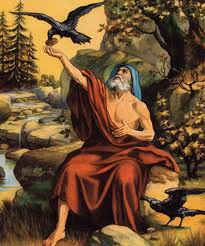
“Then a revelation from the Lord came to him: ‘Leave here, turn eastward, and hide yourself at the Wadi Cherith where it enters the Jordan.  You are to drink from the wadi, I have commanded the ravens to provide for you there.’  So he did what the Lord commanded, Elijah left and lived by the Wadi Cherith where it enters the Jordan.  The ravens kept bringing him bread and meat in the morning and in the evening, and he drank from the wadi.”  1 Kings 17:2-6

We all have pretty developed concepts of what are appropriate avenues for God to provide for us.  They are engrained in us culturally as we grow up.  We tend to follow economic paths that fall within that cultural upbringing.  Unfortunately, particularly as Christians (but not solely limited to us) we spiritualize those concepts and values and label them as Christian.  I know that since God called me to full-time ministry, and more particularly to the Urban Mission field he has been rocking my world in this area.

I can imagine Elijah’s reaction as God began to use him as a prophet to Israel.  He probably gave himself a high-five after dressing down Ahab and congratulated himself on his appointment as Yahweh’s Weatherman for Israel.  But the call to the service of our Lord and Master Jesus Christ has certain life style and life view changes that come as part of the package.  The next revelation from the Lord probably hit Elijah with as much joy as Jonah’s call to Nineveh.  Elijah already had a plan going, outlining how God could provide for him through the drought and ensuing famine; perhaps a nice cushy spot on the coast somewhere with cool deep spring and lots of fish that just jump onto the beach.  Then it comes:

“Hey Elijah, yeah you. This IS Yahweh and as you expected I have made provision…no …nope not the coast, though that would be very nice.  Nope sorry no rich family with lots of storage and living space.  I have the perfect spot, head out-of-town east.  Yes into the wilderness.  No, no spring but there will be a wadi (dried up stream bed that only runs when it rains hard) Oh yeah and I will send Ravens to feed you.”

“SEND WHAT! Ravens are going to feed me, with bread and meat in their mouths.  Have you seen a raven?  Surely there is a mistake here, I don’t eat stuff that comes from the mouth of an animal that eats mostly DEAD things.  Oh and wadi’s only run when it RAINS.”

Now of course my dialogue here is completely fabricated and probably bears a much greater resemblance to conversations that I have had with God over the way that we should be provided for but I think that the inferences are reasonably valid.  When we teach it in Sunday School it seems so cool.  Wow Elijah got to be fed from the beaks of ravens! This is the reaction of someone who has not connected raven with the bird picking at the roadkill you just drove by on your way to church!  I can continue with the proposed water source.  A creek bed that flows into the Jordan only when it rains.  This is wilderness runoff not refreshing spring water.  Consider Naaman’s reaction to just bathing in the Jordan River: “Aren’t Abana and Pharpar, the rivers of Damascus, better than all the waters of Israel?.” (2 Kings 5:12)

However no matter what his gut reaction was to God’s plan, Elijah was obedient to his God and entered the spiritual stream of provision that would provide for him and eventually for the widow of Zarepath and her son.  But what if Elijah had turned his nose up at God’s initial provision plan?  Maybe he would have been able to eke out the time and perhaps come out still used by God but he would have missed the miraculous wonder of God’s provision and of God’s almighty healing hand.  God loves rocking our world with spiritual truth before rocking our world with spiritual blessing.

Read Full Post »

I am reading the Pentateuch.  I started Deuteronomy last night.  As I read, I have noticed a few things.  The first one is that God has not changed!  His methods have not changed.  His requirements have not changed.  I never realized how many Old Testament characters believed in and served God outside of Israel and God’s covenant with Abraham.  Melchizidek, Job, even Balaam who fell prey to his own sinful desires.  As I recognize a separation between God’s dealings with mankind and God’s covenant with Abraham, Isaac and their descendants, I recognize a great harmony between the Old and New Testaments.  As I read Genesis, Exodus, (OK Leviticus creeped me out just a little, skin diseases, hair falling out, discharges….), Numbers and Deuteronomy I sensed the same God, the same message as Matthew, Mark, Luke, John, Acts or any of the epistles. 

One of the other, and more pertinent things to my current life was God’s dealings with Israel in the wilderness.  They were given the end of the story, but the path to get there was a moment by moment thing.  When the cloud/fire lifted they went.  When the cloud/fire settled they stayed put.  God was “a lamp unto their feet”.  He only provided enough information to get them to the next stop on the journey to the promised land.  It was enough to fray even Moses staunch faith in The Lord, just enough to cause him to strike a rock instead of speaking to it, just enough to keep him out of the promised land.  For the people it was too much.  They couldn’t wrap their minds around Hebrews 11:1

Now Faith is being sure of what we hope for and certain of what we do not see.

Of course they didn’t have that scripture but it was certainly what God was calling them to.  So every step of the way, they whined, they cried and when push came to shove and they faced the giants they failed.  Then they tried to fix it themselves and they failed again.  I can’t avoid the “Just In Time” information flow of the Holy Spirit but I pray that I can avoid the outcome that Israel experienced.  I have already spent enough time in the wilderness!  I have already felt the sting when I have stepped out of God’s timing.  I stand at the base of Mt. Horeb.  He has given me a vision of the promised land but the landscape between Horeb and Canaan is cluttered.  There are too many paths.  I am in a hurry.  I want the Trip-Tik or to have the Map Quest  page that gives me the route, ETA and potential tie ups along the way.  With each new development my mind races to figure out all the possible scenarios.  Sometimes it seems like the way gets foggier and foggier, until that moment when he parts the Red Sea or the walls of Jericho fall.  So here I wait for the cloud to lift and lead.  The camp is uncomfortable.  The enviroment stressful.  I am ready for the promised land but..

I wait for the Lord, my soul waits, and in his word I put my hope.  My soul waits for the Lord more than watchmen wait for the morning. Psalm 130:5-6

Read Full Post »

« Newer Posts